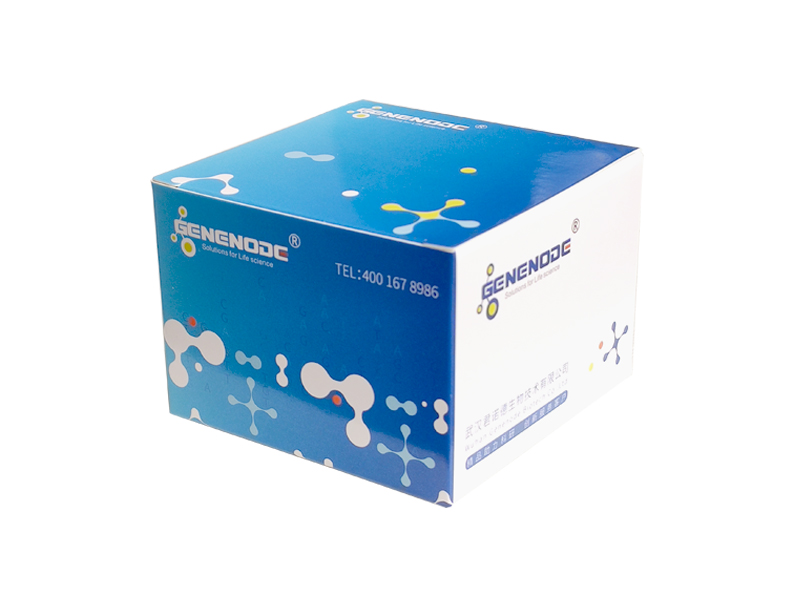
RNA Extraction Reagent(TRIzol)
Number:R2101
Specifications:20mL/50mL/100mL/5*100mL
Price:150/250/450/2020
Package:box
Storage:Room temperature
- Description
- Related
- Technical
- Download
- Consulting/Order
Product Introduction:
RNA Extraction Reagent (TRIzol) is a broad-spectrum total RNA extraction reagent. It features fast and convenient experimental operation with distinct color for easy phase separation. This reagent has a wide range of applications and can extract total RNA from samples such as animal tissues, plant materials, various microorganisms, and cultured cells.
The RNA Extraction Reagent (TRIzol) method exhibits excellent separation effects for both small amounts of tissues (50-100 mg) and cells (5×10⁶), as well as large amounts of tissues (≥1g) and cells (>10⁷). While samples are fully lysed in RNA Extraction Reagent (TRIzol), the integrity of RNA is maximally preserved. After adding chloroform and centrifuging, the solution separates into three layers: an upper colorless aqueous phase, an interphase, and a lower red organic phase. RNA is distributed in the upper aqueous phase. Total RNA can be recovered by collecting the upper aqueous phase followed by isopropanol precipitation.
The extracted total RNA has good integrity without protein or DNA contamination, and can be used in various routine molecular biology experiments, such as RT-PCR, Real-time RT-PCR, Northern blot, Dot Blot, and in vitro translation.
RNA Extraction Reagent (TRIzol) can promote the precipitation of various RNAs of different species and molecular weights. For example, RNA extracted from rat liver, when subjected to agarose gel electrophoresis and stained with ethidium bromide, shows many discontinuous high-molecular-weight bands (mRNA and hnRNA components) between 7 kb and 15 kb, two dominant ribosomal bands at ~5 kb (28S) and ~2 kb (18S), and low-molecular-weight RNA between 0.1 and 0.3 kb (tRNA, 5S). When the extracted RNA is diluted with TE, its A260/A280 ratio is ≥1.8. Note that for ordinary agarose gel electrophoresis, the 28S band is approximately at 2 kb and the 18S band at 1 kb, and the positions vary significantly with different gel concentrations.
RNA Extraction Procedure:
Note: When extracting RNA with RNA Extraction Reagent (TRIzol), wear gloves and eye protection to avoid contact with skin and clothing.
Perform operations in a chemical fume hood to avoid respiratory inhalation. Unless otherwise specified, all operations are carried out at room temperature (15~30℃).
Sample Pretreatment:
1.Tissue Homogenization
a.Plant Tissues: Take fresh plant tissues and grind thoroughly in liquid nitrogen, or cut the plant tissues into pieces and grind quickly directly in TRIzol. Add 1 mL TRIzol per 50-100 mg of tissue and mix well. Note: The sample volume should generally not exceed 10% of the TRIzol volume.
b.Animal Tissues: Take fresh or -70℃ frozen animal tissues and cut into small pieces as much as possible. Add 1 mL TRIzol per 30-100 mg of tissue and homogenize with a homogenizer. Alternatively, grind in liquid nitrogen and add 1 mL TRIzol to mix well. Note: The sample volume should generally not exceed 10% of the TRIzol volume.
c.Monolayer Cultured Cells (Adherent Cells): After removing residual culture medium as much as possible, directly add 1 mL TRIzol to a 3.5 cm diameter culture plate to cover and repeatedly pipette to lyse the cells. The amount of TRIzol required is determined based on the area of the culture plate rather than the number of cells (1 mL per 10 cm²). Insufficient TRIzol volume may result in DNA contamination in the extracted RNA.
d.Note: Adherent cultured cells often cannot be completely detached from the culture flask (dish), which does not mean incomplete lysis. At this time, the cell membrane has actually been completely disrupted and RNA has been released; proceed with the next steps.
e.Suspension Cells: Collect cells by centrifugation. Lyse the cells by repeatedly pipetting in TRIzol reagent. Add 1 mL TRIzol per 5~10×10⁶ animal cells, plant or yeast cells, or per 1×10⁷ bacteria. Avoid washing the cells before adding TRIzol, as this will increase the possibility of mRNA degradation. Disruption of certain yeasts and bacteria may require the use of a homogenizer.
f.Blood: It is recommended to use our TRI LS Reagent (Cat. No.: R2107), which is a TRIzol Reagent dedicated for whole blood or liquid samples. LS stands for Liquid Sample, equivalent to TRIzol LS from Invitrogen.
Extraction Steps:
2.Vigorously shake the homogenized sample and let it stand at room temperature for 5 minutes to completely dissociate ribosomes.
3.Optional step: Centrifuge at 12,000 rpm at 4°C for 10 minutes and take the supernatant.
If the sample contains a lot of proteins, fats, polysaccharides, or muscles, plant tubers, nodules, etc., centrifugation can be performed to remove them. The pellet after centrifugation contains cell outer membranes, polysaccharides, and high-molecular-weight DNA, while the supernatant contains RNA. When processing fat tissue samples, the upper layer is a large amount of oil which should be removed. Take the clear homogenate for the next step.
4.Add 0.2 mL chloroform per 1 mL TRIzol. Tighten the tube cap, shake vigorously for 15 seconds, and let it stand at room temperature for 2~3 minutes.
5.Centrifuge at 12,000 rpm in a high-speed refrigerated centrifuge at 4°C for 10-15 minutes. After centrifugation, the mixture separates into three layers: the lower red organic phenol-chloroform layer, the interphase, and the upper colorless aqueous layer. RNA is present in the upper aqueous layer. The volume of the aqueous layer is approximately 50-60% of the added TRIzol volume. (The organic layer and interphase contain proteins and DNA; if extraction is needed, please contact us for the extraction method.)
6.Transfer the aqueous layer to a clean centrifuge tube, add an equal volume of isopropanol. Invert to mix well and let stand at room temperature for 10 minutes. RNA pellets are usually not visible before centrifugation, but form gelatinous pellets on the side and bottom of the tube after centrifugation.
7.Centrifuge at 12,000 rpm at room temperature or 4°C for 10 minutes and discard the supernatant.
8.Add 75% ethanol to wash the pellet. Use 1 mL 75% ethanol per 1 mL TRIzol to wash the pellet.
9.Centrifuge at 12,000 rpm at room temperature or 4°C for 3 minutes, discard the supernatant, and be careful not to lose the RNA pellet.
Note: For any remaining liquid, centrifuge briefly and aspirate with a pipette tip, taking care not to aspirate the pellet.
10.Let stand at room temperature for 2-3 minutes to air-dry. Add 30-100 μL RNase-free water to fully dissolve the RNA. The obtained RNA is stored at -70℃ to prevent degradation.
Note: Do not over-dry the pellet, as it will be difficult to dissolve.
Instructions for Filling out the Form:
1. During working hours, we will reply by email or phone within one hour! During non-working hours, we will reply by email within 8 to 16 hours!
2. When placing an order for the product, you also need to fill in your company's invoicing information and the contact details for receiving the goods. We will reply with the latest discounted price and delivery time via email. After both parties reach an agreement through consultation, a product sales contract will be signed. The payment will be made to the company as agreed, and the invoice will be issued and the goods will be dispatched.