
English


QQ:1195537948
Tel:400-167-8986
Email:order@genenode.com
Web:www.genenode.com
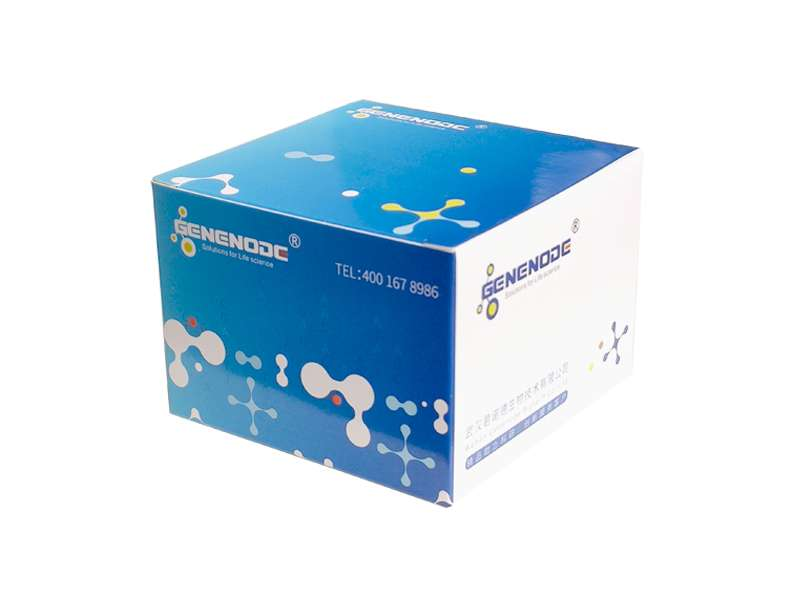
Agarose Gel DNA Extraction Kit(SpinColumn)
Number:P2302
Specifications:100T/200T
Price:320/620
Package:box
Storage:4℃
Agarose Gel DNA Extraction Kit(SpinColumn)
Packing Specification:
| P2302-50 | Agarose Gel DNA Extraction Kit(SpinColumn) | 50T | CNY200 |
| P2302-100 | Agarose Gel DNA Extraction Kit(SpinColumn) | 100T | CNY320 |
| P2302-200 | Agarose Gel DNA Extraction Kit(SpinColumn) | 200T | CNY620 |
Product Introduction:
In the presence of high chaotropic salts, DNA fragments selectively bind to the silica matrix membrane in the spin column. Through a series of rapid washing-centrifugation steps, impurities such as primers, nucleotides, proteins, and enzymes are removed by the wash buffer. Finally, pure DNA is eluted from the silica matrix membrane using a low-salt and high-pH elution buffer.
Product Features:
1.The silica matrix membranes in the spin columns are all high-quality specially manufactured adsorption membranes, ensuring minimal variation in adsorption capacity between columns.
2.Uses high-quality gel dissolving buffer without sodium iodide or perchlorate found in traditional gel dissolving buffers, which do not inhibit downstream reactions such as restriction digestion, ligation, and cloning after recovery.
3.The gel dissolving buffer is formulated with phenol red to appear yellow, facilitating observation of gel dissolution and pH monitoring for optimal binding efficiency, greatly improving recovery rate.
4.Improved gel dissolving buffer formula enhances buffering capacity and stability, maintaining pH within the optimal binding range even with significant sample variations.
5.Rapid and convenient: Eliminates the need for toxic reagents such as phenol and chloroform, as well as ethanol precipitation.
Application Scope:
Suitable for recovering 100 bp-5 kb DNA fragments from agarose gels containing 1-15 μg of DNA. The recovery rate can be as high as 85%. The recovered DNA fragments can be used for various routine experiments such as restriction digestion, ligation, transformation, PCR templates, sequencing, and library construction.
Operation Steps:
Tip: Before first use, add the specified volume of absolute ethanol to the Wash Buffer WB bottle, mix thoroughly. Mark the corresponding box immediately after adding ethanol to avoid repeated additions!
1.Under long-wavelength UV light, excise the desired DNA band with a clean blade. Remove as much gel without DNA as possible to minimize the gel volume.
2.Transfer the excised gel containing the DNA band into a 1.5 mL centrifuge tube and weigh it.
Weigh an empty 1.5 mL centrifuge tube first, then weigh it again with the gel piece. The gel weight is the difference between the two measurements.
3.Add 3 volumes of Gel Dissolving Buffer DD.
If the gel weighs 100 mg (volume considered 100 μL), add 300 μL of gel dissolving buffer.
If the gel concentration is greater than 2%, add 6 volumes of gel dissolving buffer.
4.Incubate in a 56℃ water bath for 10 minutes (or until the gel is completely dissolved). Vortex every 2-3 minutes to accelerate dissolution.
5.Optional (generally not required): Add 150 μL of isopropanol per 100 mg of initial gel weight and vortex to mix.
Adding isopropanol may improve recovery rate in some cases; do not centrifuge after addition. For recovering fragments larger than 4 Kb, do not add isopropanol as it may reduce recovery efficiency.
Pretreat the adsorption column with Equilibration Buffer (mandatory step; refer to "About the Use of Equilibration Buffer" above for specific methods.)
6.Load the solution obtained in the previous step into the Spin EC Adsorption Column (placed in a collection tube), let stand at room temperature for 1 minute, centrifuge at 12,000 rpm for 30-60 seconds, and discard the waste liquid in the collection tube.
If the total volume exceeds 750 μL, load the solution into the same Spin EC Adsorption Column in two batches.
After mixing the filtered gel dissolving buffer with the residual strongly alkaline Equilibration Buffer in the collection tube, the gel dissolving buffer may change color from yellow to orange-red or even purple, which is a normal color change of the phenol red pH indicator under alkaline conditions.
7.Add 600 μL of Wash Buffer WB (check if absolute ethanol has been added!). Centrifuge at 12,000 rpm for 30 seconds and discard the waste liquid.
8.Add another 600 μL of Wash Buffer WB, centrifuge at 12,000 rpm for 30 seconds, and discard the waste liquid.
9.Place the Spin EC Adsorption Column back into the empty collection tube. Centrifuge at 12,000 rpm for 2 minutes to completely remove residual wash buffer (residual ethanol may inhibit downstream reactions).
10.Transfer the Spin EC Adsorption Column to a clean centrifuge tube. Add 50 μL of Elution Buffer EB (preheating the elution buffer in a 65-70℃ water bath can improve yield) to the center of the adsorption membrane. Incubate at room temperature for 2 minutes, then centrifuge at 12,000 rpm for 1 minute. For larger DNA yield, reapply the eluate to the adsorption column and centrifuge for 1 minute.
Higher elution volume leads to higher elution efficiency. To obtain higher DNA concentration, the elution volume can be appropriately reduced, but the minimum volume should not be less than 25 μL (excessively small volume reduces DNA elution efficiency and yield).


Official wechat
Contact number
18518676727
Instant messaging
QQ:800176181/1195537948
order@genenode.com
Address
C5-1, Zone C, Yangluo Port Huazhong International Industrial Park, No. 99, Yubo North Road, Yangtze River New Area, Wuhan City, Hubei Province
©2011-2025 IBAC 主营业务:RNA pull down DNA pull down GST pull down CoIP LC-MS/MS TAP-MS 抗体测序 版权所有