
English


QQ:1195537948
Tel:400-167-8986
Email:order@genenode.com
Web:www.genenode.com
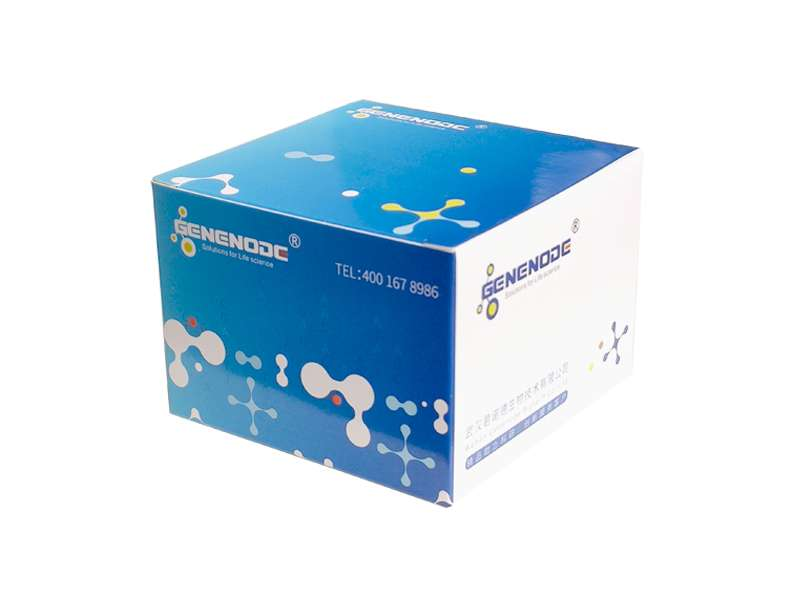
Blood gDNA Extraction Mini Kit(96 well plate)
Number:DW2501
Specifications:2*96T/10*96T
Price:1600/7200
Package:box
Storage:RT
Blood gDNA Extraction Mini Kit(96 well plate)
Packing Specification:
| D2501W-2 | Blood gDNA Extraction Mini Kit(96 well plate) | 2*96T | CNY1600 |
| D2501W-10 | Blood gDNA Extraction Mini Kit(96 well plate) | 10*96T | CNY7200 |
Product Introduction:
A unique binding buffer/Proteinase K rapidly lyses cells and inactivates intracellular nucleases. Genomic DNA is then selectively adsorbed onto the silica matrix membrane in the spin column under high chaotropic salt conditions. Impurities such as cellular metabolites and proteins are removed by the inhibitor removal buffer and washing buffer through a series of rapid washing-centrifugation steps. Finally, pure genomic DNA is eluted from the silica matrix membrane using a low-salt elution buffer.
Application Scope:
Suitable for rapid extraction of genomic DNA from whole blood.
Product Features:
1.No toxic reagents such as phenol are required, nor are steps like ethanol precipitation.
2.Fast and simple: operation for a single sample can usually be completed within 20 minutes.
3.Multiple column washing steps ensure high purity. A typical yield of 3-12 µg can be extracted from 200 μL of whole blood, with a typical OD260/OD280 ratio of 1.7-1.9 and a length of up to 30 kb-50 kb. The DNA can be directly used for PCR, Southern-blot, and various restriction enzyme digestion reactions.
4.The red blood cell lysis buffer formula is optimized from over a dozen formulations, ensuring rapid and complete lysis. Customers can choose to purchase it as needed.
A typical yield of 3-12 µg of genomic DNA can be extracted from 200 μL of whole blood.
Operation Steps:
Pre-Experiment Preparation:
1)Preheat the incubator or water bath to 56℃.
2)Ensure that the specified amount of absolute ethanol has been added to the Washing Buffer WB bottle in advance.
3)Dilute the 10× Red Blood Cell Lysis Buffer to 1× with pure water.
Operation Steps (200 μL Blood Processing Protocol):
1.Pre-mix Binding Buffer CB and Proteinase K (20mg/mL) at a ratio of 200 μL of Binding Buffer CB to 20 μL of Proteinase K per sample (prepare 1 extra portion for every 24 samples). Aliquot 220 μL of the mixture per sample into a 96-well deep well plate (96 Well Plate).
Tips 1: If the starting volume of whole blood is less than 200 μL, make up to 200 μL with Buffer BB.
Tips 2: If processing anticoagulated blood from avian, amphibian, or lower organisms with nucleated red blood cells, use 5-20 μL of blood and make up to 200 μL with Buffer BB.
Tips 3 (Optional, generally not required): If RNA contamination is significant and needs to be removed, add 20 μL of RNase A (25mg/mL) solution before adding 200 μL of Binding Buffer CB, vortex to mix, and incubate at room temperature for 5-10 minutes.
2.Add 200 μL of blood sample to each well (mark the position of each sample well in Excel in advance), pipette to mix, cover with a sealing film (prepared by user), incubate at 56°C for 30 minutes, and gently shake every 10 minutes. Note: Do not shake vigorously to prevent liquid splashing and cross-contamination.
3.After cooling the 96-well deep well plate, remove the sealing film, add 100 μL of isopropanol, pipette 20 times to mix. Flocculent precipitation may occur at this time.
Tips: Thorough mixing by pipetting is very important; insufficient mixing will seriously reduce yield. If the sample is too viscous to mix easily, vortex for 15 seconds to mix.
4.Transfer the solution and flocculent precipitate from the previous step to the corresponding wells of the semi-skirted 96-well Filter Plate (place the 96-well Filter Plate in a 96-well deep well plate), cover with a new sealing film, centrifuge at 3,600 rpm (~2,130 x g) for 10 minutes, discard the waste liquid in the deep well plate, and place the Filter Plate back on the deep well plate.
5.Add 500 μL of Inhibitor Removal Buffer IR (Buffer IR) to the 96-well Filter Plate, cover with a new sealing film, centrifuge at 3,600 rpm (~2,130 x g) for 10 minutes, discard the waste liquid in the deep well plate, and place the Filter Plate back on the deep well plate.
6.Add 500 μL of Washing Buffer WB (check if absolute ethanol has been added before use) to the 96-well Filter Plate, cover with a new sealing film, centrifuge at 3,600 rpm (~2,130 x g) for 10 minutes, discard the waste liquid, and place the Filter Plate back on the deep well plate.
7.Add another 500 μL of Washing Buffer WB to the 96-well Filter Plate, cover with a new sealing film, centrifuge at 3,600 rpm (~2,130 x g) for 15 minutes, discard the waste liquid, and place the Filter Plate back on the deep well plate.
8.Centrifuge at 3,600 rpm (~2,130 x g) for 10 minutes to remove residual Washing Buffer from the adsorption column, as residual ethanol in the Washing Buffer may inhibit downstream reactions (enzymatic reactions such as restriction digestion and PCR).
9.Transfer the 96-well Filter Plate to a new 96-well Collection Plate (96 Square Plate). Add 80 μL of Elution Buffer EB (pre-warming the elution buffer in a 65-70℃ water bath beforehand improves elution efficiency) dropwise to the center of the adsorption membrane of the purification plate without touching it. Incubate at room temperature for 5-10 minutes, cover with a new sealing film, centrifuge at 3,600 rpm (~2,130 x g) for 10 minutes to collect DNA. Seal with a new sealing film for downstream experiments or store at -20°C.
Tips: The pH of the elution buffer has a significant impact on elution efficiency. If using ddH2O as the elution buffer, ensure its pH is within the range of 7.0-8.5; a pH below 7.0 will reduce elution efficiency.
Operation Steps (600 μL Blood Processing Protocol):
Sample Pre-treatment (600 μL Blood):
1.Prepare a new 96-well deep well plate, pre-add 1200 μL of 1x Red Blood Cell Lysis Buffer to each well. Add 600 μL of blood sample to each well (mark the position of each sample well in Excel in advance), pipette to mix, cover with a sealing film (prepared by user), incubate at room temperature for 5-10 minutes, centrifuge at 3,600 rpm (~2,130 x g) for 10 minutes, remove the sealing film, and aspirate the supernatant.
2.Add another 1200 μL of 1x Red Blood Cell Lysis Buffer, pipette to mix, cover with a sealing film, incubate at room temperature for 3-5 minutes, centrifuge at 3,600 rpm (~2,130 x g) for 10 minutes, remove the sealing film, and completely aspirate the supernatant.
3.Add 200 μL of Buffer BB, pipette 20 times to resuspend the white blood cell pellet and fully disperse the pellet.
4.Pre-mix Binding Buffer CB and Proteinase K (20mg/mL) at a ratio of 200 μL of Binding Buffer CB to 20 μL of Proteinase K per sample (prepare 1 extra portion for every 24 samples). Aliquot 220 μL of the mixture into the 96-well deep well plate (96 Well Plate) containing the samples, pipette 20 times to mix, and ensure the cell particles form a suspended dispersion.
5.After mixing by pipetting, cover with a sealing film (prepared by user), incubate at 56°C for 30 minutes, and gently shake every 10 minutes. Note: Do not shake vigorously to prevent liquid splashing and cross-contamination.
6.Proceed to Step 3 of the 200 μL Blood Processing Protocol.


Official wechat
Contact number
18518676727
Instant messaging
QQ:800176181/1195537948
order@genenode.com
Address
C5-1, Zone C, Yangluo Port Huazhong International Industrial Park, No. 99, Yubo North Road, Yangtze River New Area, Wuhan City, Hubei Province
©2011-2025 IBAC 主营业务:RNA pull down DNA pull down GST pull down CoIP LC-MS/MS TAP-MS 抗体测序 版权所有