
English


QQ:1195537948
Tel:400-167-8986
Email:order@genenode.com
Web:www.genenode.com
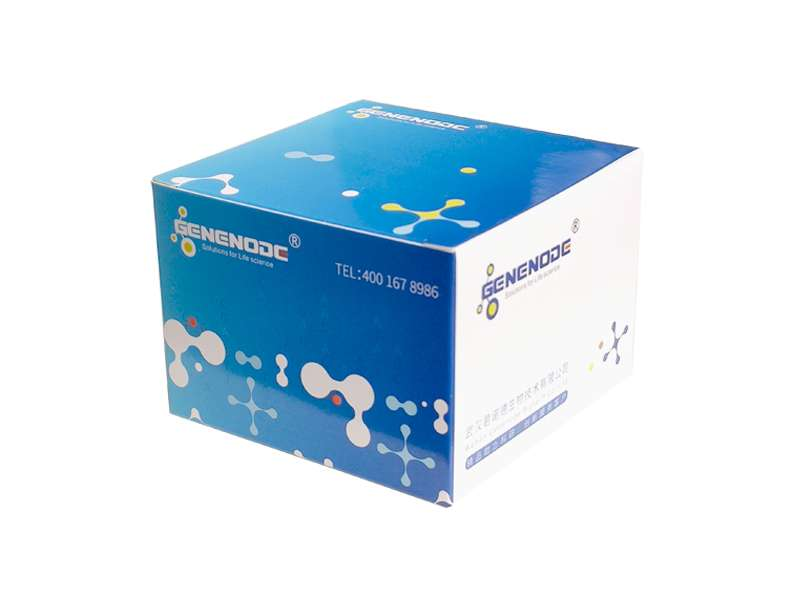
Blood/Tissue/Cell gDNA Extraction Kit(SpinColumn)
Number:D2511
Specifications:50T/100T/200T
Price:520/900/1750
Package:box
Storage:4℃
Blood/Tissue/Cell gDNA Extraction Kit(SpinColumn)
Packing Specification:
| D2511-50 | Blood/Tissue/Cell gDNA Extraction Kit(SpinColumn) | 50T | CNY520 |
| D2511-100 | Blood/Tissue/Cell gDNA Extraction Kit(SpinColumn) | 100T | CNY900 |
| D2511-200 | Blood/Tissue/Cell gDNA Extraction Kit(SpinColumn) | 200T | CNY1750 |
Product Introduction:
This kit uses a unique combination of Binding Buffer and Proteinase K to rapidly lyse cells and inactivate intracellular nucleases. Genomic DNA is then selectively adsorbed onto the silica membrane of the spin column under high chaotropic salt conditions. Through a series of rapid washing and centrifugation steps, Inhibitor Removal Buffer and Wash Buffer remove impurities such as cellular metabolites and proteins. Finally, pure genomic DNA is eluted from the silica membrane using a low-salt Elution Buffer.
Product Features:
1.The silica membrane in the spin column is made of imported special adsorption membrane, ensuring minimal variation in adsorption capacity between columns.
2.No need for toxic reagents such as phenol or ethanol precipitation steps.
3.Fast and simple; operation for a single sample can generally be completed within 30 minutes.
4.Multiple column washes ensure high purity. Typically, 3-6 µg of DNA can be extracted from 200 µL of whole blood, with a typical OD260/OD280 ratio of 1.7-1.9 and a length of 30 kb - 50 kb. The DNA can be directly used for PCR, Southern blot, and various restriction enzyme digestion reactions.
5.Optimized red blood cell lysis buffer formula selected from dozens of formulations (available for separate purchase upon request).
Application Scope:
Suitable for the rapid extraction of genomic DNA from whole blood, and various animal and plant tissues and cells.
Operation Steps:
Tips:
Before first use, add the specified amount of anhydrous ethanol to Wash Buffer WB, mix thoroughly, and mark the box to indicate ethanol has been added to avoid repeated addition!
Pretreat the spin column with Equilibration Buffer (mandatory step; see "Use of Equilibration Buffer" above for detailed method).
1.Whole Blood
a.Take 200 µL of fresh, frozen, or anticoagulated blood and place it into a 1.5 mL centrifuge tube.
If the initial volume of whole blood is less than 200 µL, make up to 200 µL with Buffer BB. If the initial volume is between 200 µL-300 µL, proportionally increase the reagent dosage in subsequent steps. If the initial volume is between 300 µL-1 mL, first perform red blood cell lysis (see Appendix at the end of this manual).
For anticoagulated blood from avians, birds, amphibians, or lower organisms (with nucleated red blood cells), use 5-20 µL of blood and make up to 200 µL with Buffer BB before proceeding to subsequent steps.
b.Add 20 µL of Proteinase K (20 mg/mL) solution, mix thoroughly. Add 200 µL of Binding Buffer CB, immediately vortex to mix well, and incubate at 70℃ for 10 minutes. The solution should become clear (but appear dark in color).
Optional step (generally not required): If significant RNA contamination is present, add 20 µL of RNase A (25 mg/mL) solution before adding 200 µL of Binding Buffer CB, vortex to mix, and incubate at room temperature for 5-10 minutes.
c.After cooling, add 100 µL of isopropanol and immediately vortex to mix thoroughly (flocculent precipitation may occur).
Immediate vortexing or pipetting to mix thoroughly is critical in this step. Inadequate mixing will severely reduce yield. For viscous samples that are difficult to mix, vortex for 15 seconds if necessary.
d.Load the solution and flocculent precipitation from the previous step into a Spin AC column (placed in a collection tube). Centrifuge at 13,000 rpm for 60 seconds and discard the waste liquid in the collection tube.
f.Proceed to Step 5 under "Common Operation Steps".
2.Cultured Tissue Cells
a.Collect approximately 10⁵-10⁶ suspension cells into a 1.5 mL centrifuge tube. For adherent cells, digest with trypsin first, then pipette to detach and collect.
b.Centrifuge at 13,000 rpm for 10 seconds to pellet the cells. Discard the supernatant, leaving the cell pellet with approximately 10-20 µL of residual liquid.
c.Add 200 µL of 1×PBS to resuspend and wash the cells. Centrifuge at 13,000 rpm for 10 seconds to pellet the cells. Aspirate and discard the supernatant completely, then resuspend the cell pellet in 180 µL of 1×PBS.
d.Add 20 µL of Proteinase K (20 mg/mL) solution, mix thoroughly. Add 200 µL of Binding Buffer CB, immediately vortex to mix well, and incubate at 70℃ for 10 minutes.
Optional step (generally not required): If significant RNA contamination is present, add 20 µL of RNase A (25 mg/mL) solution before adding 200 µL of Binding Buffer CB, vortex to mix, and incubate at room temperature for 5-10 minutes.
e.After cooling, add 100 µL of isopropanol and immediately vortex to mix thoroughly (flocculent precipitation may occur).
f.Load the mixture (including any precipitation) into a Spin AC column (placed in a collection tube). Centrifuge at 13,000 rpm for 60 seconds and discard the waste liquid in the collection tube.
g.Proceed to Step 5 under "Common Operation Steps".
3.Animal and Plant Tissues (e.g., Mouse Liver, Brain, or Plant Leaves)
a.Cut 20-50 mg of fresh or thawed tissue into small pieces with a scalpel (cutting into small pieces can improve yield) or grind into fine powder in liquid nitrogen. Transfer into a 1.5 mL centrifuge tube containing 180 µL of Tissue Lysis Buffer TL and pipette to mix with a large-bore pipette tip.
b.Add 20 µL of Proteinase K (20 mg/mL) solution, immediately vortex to mix thoroughly.
c.Incubate the lysate in a 55℃ water bath for 1-3 hours or until complete tissue digestion, gently shaking several times during incubation to assist lysis.
Optional step (generally not required): If significant RNA contamination is present, add 20 µL of RNase A (25 mg/mL) solution after completing Step 3, vortex to mix, and incubate at room temperature for 5-10 minutes.
d.Add 200 µL of Binding Buffer CB, immediately vortex to mix thoroughly, and incubate at 70℃ for 10 minutes.
e.After cooling, add 100 µL of isopropanol and immediately vortex to mix thoroughly (flocculent precipitation may occur).
f.Use a 1 mL pipette tip to aspirate the mixture and load it into a Spin AC column (placed in a collection tube). Centrifuge at 13,000 rpm for 60 seconds and discard the waste liquid in the collection tube.If insoluble tissue debris clogs the pipette tip, gently rub the tip on absorbent paper to remove the debris. If only a small amount of mixture is aspirated, discard the tip and debris together to avoid clogging the spin column.
g.Proceed to Step 5 under "Common Operation Steps".
4.Animal Tissue (Mouse Tail)
a.Cut 0.2-0.5 cm of the mouse tail tip (i.e., 20-50 mg; ensure to cut within 0-2 cm of the tail tip for optimal lysis) into small pieces, or grind the tissue into fine powder in liquid nitrogen. Transfer into a 1.5 mL centrifuge tube containing 180 µL of Tissue Lysis Buffer TL and pipette to mix with a large-bore pipette tip.
b.Add 20 µL of Proteinase K (20 mg/mL) solution, immediately vortex to mix thoroughly.
c.Incubate the lysate in a 55℃ water bath for 3 hours or until complete tissue digestion, gently shaking several times during incubation to assist lysis.
Optional step (generally not required): If significant RNA contamination is present, add 20 µL of RNase A (25 mg/mL) solution after completing Step 3, vortex to mix, and incubate at room temperature for 5-10 minutes.
d.Aspirate the lysate 2-3 times with a 1 mL disposable syringe without a needle.
e.Add 200 µL of Binding Buffer CB and 100 µL of isopropanol, immediately vortex to mix thoroughly.
f.Centrifuge at 13,000 rpm for 5 minutes. Load the supernatant into a Spin AC column (placed in a collection tube). Centrifuge at 13,000 rpm for 30-60 seconds and discard the waste liquid in the collection tube.
g.Proceed to Step 5 under "Common Operation Steps".
Immediate vortexing or pipetting to mix thoroughly is critical in the above steps. Inadequate mixing will severely reduce yield. For viscous samples that are difficult to mix, vortex for 15 seconds if necessary.
5.Add 500 μL of Inhibitor Removal Buffer IR, centrifuge at 12,000 rpm for 30 seconds, and discard the waste liquid.
6.Add 600 μL of Wash Buffer WB (ensure anhydrous ethanol has been added!), centrifuge at 12,000 rpm for 30 seconds, and discard the waste liquid.
7.Add another 600 μL of Wash Buffer WB, centrifuge at 12,000 rpm for 30 seconds, and discard the waste liquid.
8.Place the Spin AC column back into the empty collection tube and centrifuge at 13,000 rpm for 2 minutes to thoroughly remove residual Wash Buffer (residual ethanol may inhibit downstream reactions).
9.Remove the Spin AC column and place it into a clean centrifuge tube. Add 100 μL of Elution Buffer EB (preheating the elution buffer in a 65-70℃ water bath beforehand) to the center of the adsorption membrane. Incubate at room temperature for 3-5 minutes, then centrifuge at 12,000 rpm for 1 minute. Transfer the eluted solution back into the spin column, incubate at room temperature for 2 minutes, and centrifuge at 12,000 rpm for 1 minute.
Larger elution volumes result in higher elution efficiency. For higher DNA concentration, reduce the elution volume (minimum 50 μL; volumes smaller than this reduce elution efficiency and DNA yield).
10.Store DNA at 2-8℃ for short-term use or -20℃ for long-term storage.


Official wechat
Contact number
18518676727
Instant messaging
QQ:800176181/1195537948
order@genenode.com
Address
C5-1, Zone C, Yangluo Port Huazhong International Industrial Park, No. 99, Yubo North Road, Yangtze River New Area, Wuhan City, Hubei Province
©2011-2025 IBAC 主营业务:RNA pull down DNA pull down GST pull down CoIP LC-MS/MS TAP-MS 抗体测序 版权所有