
English


QQ:1195537948
Tel:400-167-8986
Email:order@genenode.com
Web:www.genenode.com
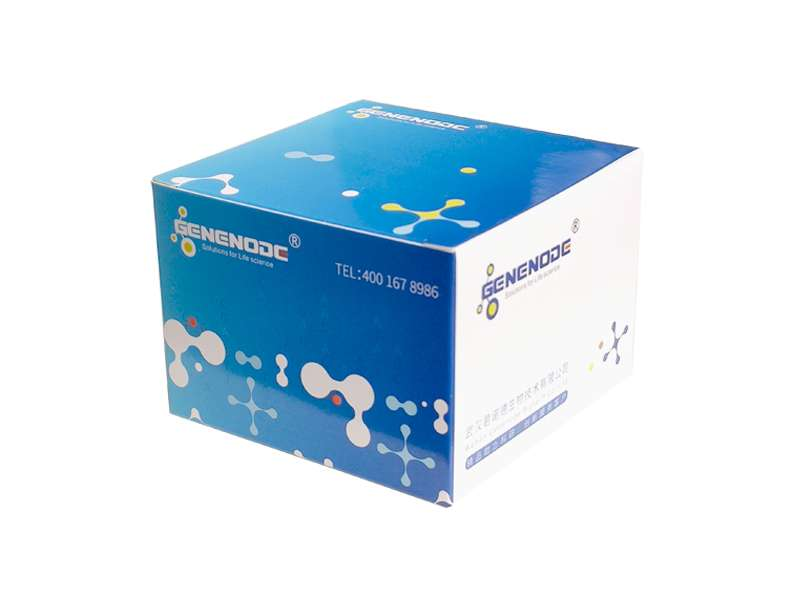
Quick Plant gDNA Isolation Kit(Solution)
Number:D2515
Specifications:50T/100T/200T
Price:260/460/840
Package:box
Storage:4℃
Quick Plant gDNA Isolation Kit(Solution)
Packing Specification:
| D2515-50 | Quick Plant gDNA Isolation Kit(Solution) | 50T | CNY260 |
| D2515-100 | Quick Plant gDNA Isolation Kit(Solution) | 100T | CNY460 |
| D2515-200 | Quick Plant gDNA Isolation Kit(Solution) | 200T | CNY840 |
Product Introduction:
This kit adopts a unique buffer system, specially designed for extracting genomic DNA from plant dry powder or fresh plant materials. No phenol/chloroform extraction is required, making it safe and convenient to use, and it can maximize the removal of impurity proteins and other organic compounds in cells. There is no restriction on the initial weight of the sample, allowing researchers to flexibly adjust according to their needs. The extracted genomic DNA has large fragments, high purity, and stable and reliable quality. The DNA recovered using this kit is suitable for various routine operations, including enzyme digestion, PCR, library construction, Southern hybridization, and other experiments.
Product Features:
1.No need for toxic reagents such as phenol or chloroform.
2.Fast and simple; the entire operation process can be completed within 1 hour.
3.Stable results and high yield (more than twice the yield of spin column-based kits). The typical OD260/OD280 ratio is 1.7-1.9, and the DNA length can reach 50 kb-150 kb. It can be directly used for PCR, Southern blot, various restriction enzyme digestion reactions, and library construction.
Application Scope:
Suitable for extracting genomic DNA from plant dry powder or fresh plant materials.
Operation Steps:
1.Take an appropriate amount of plant tissue (100 mg of fresh tissue or 20 mg of dry tissue) and grind it thoroughly into fine powder in a mortar with liquid nitrogen.
2.Transfer the fine powder to a 1.5 mL centrifuge tube (do not thaw). Add 400 μL of Buffer AP1 and 4 μL of RNase A (10 mg/mL), vortex to mix thoroughly to assist lysis.
If tissue lysis is difficult, a gentle homogenization step for 10 seconds can be added as needed to aid lysis. In most cases, centrifugation to remove incompletely lysed tissue is not required, as there is a subsequent centrifugation step for impurity removal.
3.Incubate in a 65℃ water bath for 10 minutes, inverting the centrifuge tube 2-3 times during incubation to mix the sample.
4.Add 130 μL of Buffer AP2, mix thoroughly, incubate on ice for 5 minutes, then centrifuge at 14,000 rpm for 5 minutes. Carefully aspirate the supernatant into a new 1.5 mL centrifuge tube, taking care not to aspirate the interface material.
5.Optional step: Centrifuge the supernatant again at 14,000 rpm (~13,400 x g) for 5 minutes. Carefully and slowly aspirate the supernatant into a new 1.5 mL centrifuge tube, avoiding the precipitate.
This step is intended to remove precipitate impurities in the supernatant, resulting in higher purity of the extracted genomic DNA.
6.Add 0.7 volumes of room temperature isopropanol (e.g., 350 μL of isopropanol for 500 μL of supernatant), invert 30 times to mix until flocculent (filamentous) white DNA precipitate appears.
7.Centrifuge at 12,000 rpm for 2 minutes. A white DNA pellet will be visible at the bottom of the tube. Discard the supernatant.
8.Add 1 mL of 70% ethanol, invert several times to wash the DNA precipitate, then centrifuge at 12,000 rpm for 1 minute. Discard the supernatant (be careful not to discard the DNA pellet). Invert the tube and tap gently on absorbent paper to drain residual ethanol, or carefully aspirate residual ethanol around the pellet and tube wall with a pipette tip. Air-dry the pellet for a few minutes.
Avoid over-drying (DNA will be extremely difficult to dissolve) or leaving excessive residual ethanol (which may inhibit downstream reactions such as enzyme digestion).
9.Add an appropriate amount of DNA Dissolution Buffer to rehydrate and dissolve the DNA pellet. Tap the tube wall to mix. Incubate at 65℃ for 30-60 minutes (no more than 1 hour), tapping the tube wall occasionally to assist hydration. Alternatively, allow hydration at room temperature or 4℃ overnight.
10.Store DNA at 2-8℃ for short-term use or -20℃ for long-term storage.


Official wechat
Contact number
18518676727
Instant messaging
QQ:800176181/1195537948
order@genenode.com
Address
C5-1, Zone C, Yangluo Port Huazhong International Industrial Park, No. 99, Yubo North Road, Yangtze River New Area, Wuhan City, Hubei Province
©2011-2025 IBAC 主营业务:RNA pull down DNA pull down GST pull down CoIP LC-MS/MS TAP-MS 抗体测序 版权所有