
English


QQ:1195537948
Tel:400-167-8986
Email:order@genenode.com
Web:www.genenode.com
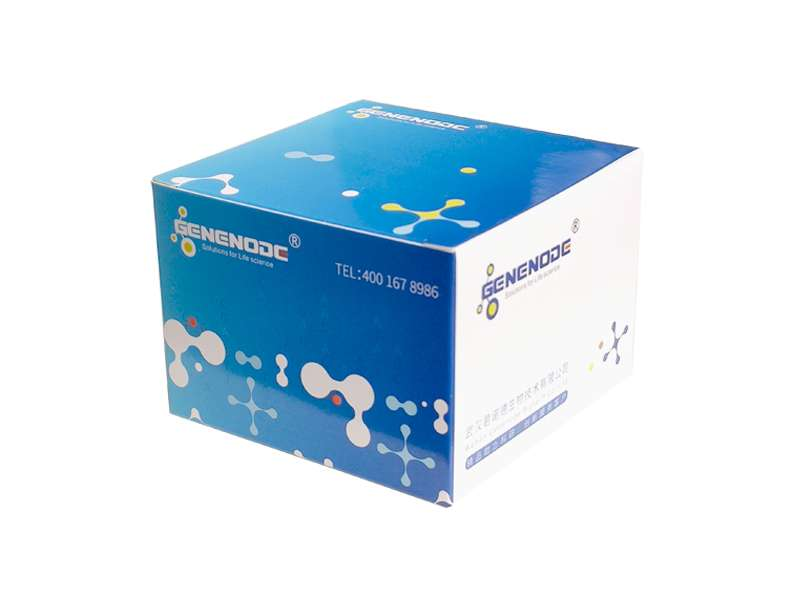
Marine Animal gDNA Extraction Kit(SpinColumn)
Number:D2534
Specifications:50T/100T
Price:500/860
Package:box
Storage:4℃
Marine Animal gDNA Extraction Kit(SpinColumn)
Packing Specification:
| D2534-50 | Marine Animal gDNA Extraction Kit(SpinColumn) | 50T | CNY500 |
| D2534-100 | Marine Animal gDNA Extraction Kit(SpinColumn) | 100T | CNY860 |
Product Introduction:
The unique combination of Binding Buffer and Proteinase K rapidly lyses cells and inactivates intracellular nucleases. Genomic DNA is then selectively adsorbed onto the silica matrix membrane of the spin column under high chaotropic salt conditions. Through a series of rapid washing-centrifugation steps, Inhibitor Removal Buffer and Washing Buffer remove impurities such as cellular metabolites and proteins. Finally, pure genomic DNA is eluted from the silica matrix membrane using low-salt Elution Buffer.
Application Scope:
Suitable for rapid extraction of genomic DNA from various marine animal tissues.
Operation Steps:
Note: Before first use, add the specified amount of absolute ethanol to Washing Buffer WB, mix thoroughly. After addition, mark the corresponding box to indicate ethanol has been added to avoid repeated additions!
1.Cut no more than 30 mg of tissue sample, place it into a 1.5 mL centrifuge tube containing 180 μL of Lysis Buffer SL, and vortex for 15 seconds.
The starting amount may vary slightly depending on the tissue type. Gills have a high cell density, so the recommended maximum amount is 20 mg. For difficult-to-lyse tissues, grind with liquid nitrogen first.
2.Add 20 μL of Proteinase K solution (20mg/mL), immediately vortex thoroughly to mix. Incubate the lysate in a 55℃ water bath for 1-3 hours or until the tissue is completely digested.
Lysis time varies by tissue type, usually 0.5–2 hours. Scallop tissue can be fully lysed in 0.5 hours, while shrimp and fish tissues require 1 hour. Vortex the sample 2-3 times per hour, 15 seconds each time.
Optional step: If RNA contamination is significant, add 20 μL of RNase A solution (25mg/mL) after Step 2, vortex to mix, and incubate at room temperature for 5-10 minutes to remove RNA.
3.Add 200 μL of Binding Buffer CB, immediately vortex thoroughly to mix, and incubate at 70℃ for 10 minutes.
4.After cooling, add 100 μL of isopropanol, invert or vortex thoroughly to mix. Flocculent precipitation may occur at this step.
5.Transfer the mixture (including any precipitation) to a Spin Column AC (placed in a collection tube), centrifuge at 13,000 rpm for 60 seconds, and discard the waste liquid in the collection tube.
If insoluble tissue debris clogs the pipette tip, gently wipe the tip on absorbent paper to remove the debris; if only a small amount of mixture is aspirated, discard the tip and debris together to prevent clogging of the spin column.
Immediate vortexing or pipetting to mix thoroughly is critical in the above steps. Inadequate mixing will significantly reduce yield. If the sample is viscous and difficult to mix, vortex for 15 seconds if necessary.
6.Add 500 μL of Inhibitor Removal Buffer IR, centrifuge at 12,000 rpm for 30 seconds, and discard the waste liquid.
7.Add 600 μL of Washing Buffer WB (check if absolute ethanol has been added!), centrifuge at 12,000 rpm for 30 seconds, and discard the waste liquid.
8.Add another 600 μL of Washing Buffer WB, centrifuge at 12,000 rpm for 30 seconds, and discard the waste liquid.
9.Place the Spin Column AC back into the empty collection tube, centrifuge at 13,000 rpm for 2 minutes to completely remove residual Washing Buffer (residual ethanol may inhibit downstream reactions).
10.Transfer the Spin Column AC to a clean centrifuge tube. Add 100 μL of Elution Buffer EB (pre-warming the elution buffer in a 65-70℃ water bath beforehand improves elution efficiency) to the center of the adsorption membrane. Incubate at room temperature for 3-5 minutes, then centrifuge at 12,000 rpm for 1 minute. Transfer the eluted solution back into the spin column, incubate at room temperature for 2 minutes, and centrifuge at 12,000 rpm for 1 minute.
Larger elution volumes result in higher elution efficiency. If higher DNA concentration is required, the elution volume can be appropriately reduced, but the minimum volume should not be less than 50 μL (excessively small volumes reduce elution efficiency and DNA yield).
11.DNA can be stored at 2-8℃ for short-term use, or at -20℃ for long-term storage.


Official wechat
Contact number
18518676727
Instant messaging
QQ:800176181/1195537948
order@genenode.com
Address
C5-1, Zone C, Yangluo Port Huazhong International Industrial Park, No. 99, Yubo North Road, Yangtze River New Area, Wuhan City, Hubei Province
©2011-2025 IBAC 主营业务:RNA pull down DNA pull down GST pull down CoIP LC-MS/MS TAP-MS 抗体测序 版权所有